Top restaurants don’t rely on discounts or ads. They use phone calls strategically to recover missed bookings, confirm reservations, re-engage past guests, and deliver a better customer experience.
For top restaurants, the phone is not a support channel — it’s a revenue channel.
Here are the 5 most effective ways leading restaurants use phone calls to drive bookings, repeat visits, and loyalty.
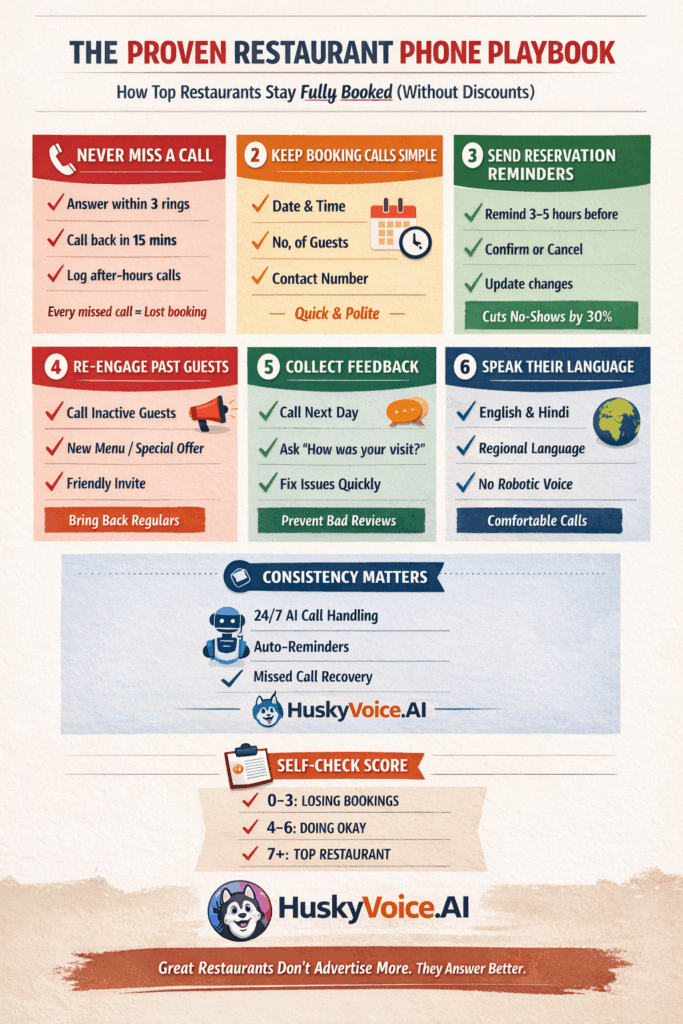
1️⃣ Never miss a call (and recover missed ones fast)
What top restaurants do
- Treat every missed call as lost revenue
- Call back within 5–15 minutes
- After-hours calls are logged and handled the next day
Why it matters
Most missed calls are:
- Reservation intent
- Delivery inquiry
- Google Search visitors
Missing them means the customer calls the next restaurant.
How HuskyVoice AI helps (subtle)
- Answers calls 24/7
- Captures intent and callback details
- Automatically calls customers back when staff is unavailable
2️⃣ Make booking calls effortless and human
What top restaurants do
- Keep booking calls under 60 seconds
- Ask only what’s required:
- Date
- Time
- Guests
- Confirm clearly and politely
Why it works
Customers remember how easy it was to book.
Quiet upgrade
- Multi-language handling (English, Hindi, Hinglish, regional languages)
- Natural pacing and tone (not IVR-style)
This is where Voice AI quietly blends in without the customer even realizing it’s automated.
3️⃣ Use reminder calls to cut no-shows
What top restaurants do
- Reminder calls 3–5 hours before reservation
- Quick reconfirmation:
- “Just checking if you’ll be joining us at 7 PM today”
Impact
- 20–30% reduction in no-shows
- Opportunity to upsell:
- Add guests
- Special requests
- Occasion notes
How HuskyVoice AI helps
- Automatically places reminder calls
- Handles confirmations or cancellations
- Updates the booking status without staff involvement
4️⃣ Re-engage past customers with warm, polite calls
What top restaurants do
- Call customers who haven’t visited in 30–60 days
- Use soft triggers:
- New menu
- Weekend specials
- Festival events
Example
“We’ve introduced a new weekend menu — would you like me to reserve a table?”
Why it works
- Feels personal
- Far cheaper than ads
- Drives repeat visits
How AI fits naturally
- Short, friendly outbound calls
- Scheduled during non-rush hours
- Consistent follow-ups without burdening staff
5️⃣ Close the loop with feedback calls
What top restaurants do
- Call customers the next day
- Ask one simple question:
- “How was your experience?”
Why it matters
- Issues are resolved before bad reviews
- Happy customers are encouraged (later) to leave Google reviews
- Builds long-term loyalty
AI advantage
- Scales feedback calls without sounding scripted
- Flags negative experiences for human follow-up
- Keeps tone calm, respectful, and non-intrusive
Why phone still beats ads for restaurants
- 📞 Higher intent than Instagram or Google Ads
- 🇮🇳 More trusted than forms or chat
- 💰 Lower cost than aggregators
- ⏱️ Instant conversion
Top restaurants don’t talk about this loudly — they just execute it consistently.
Final takeaway
If a restaurant:
- Answers every call
- Calls back missed ones
- Confirms & reminds
- Re-engages past guests
…it will stay fuller than competitors, even without heavy discounts.
Tools like HuskyVoice AI simply make this consistent and scalable — especially when staff is busy, short-handed, or closed.