For most dental clinics, the phone is still the first and most influential touchpoint in a patient’s journey.
Yet, many clinics treat it as a basic administrative channel instead of a strategic growth lever.
High-performing dental practices understand one simple truth:
Every phone call is a potential patient. Every missed call is lost revenue.
This article explains how modern dental clinics use phone calls effectively—not only to increase new patient bookings, but also to convert one-time visitors into repeat, loyal patients through timely follow-ups.
1. The Phone Is Your Highest-Converting Channel
Despite online booking tools, 60–80% of dental patients still prefer calling, especially for:
- Tooth pain or emergencies
- First-time consultations
- Treatment clarity or pricing discussions
Smart clinics treat inbound calls as consultative conversations, not interruptions. The front desk becomes a revenue-impacting role, focused on guiding callers toward appointments rather than simply answering questions.
Clinics that invest in call handling typically see 20–35% higher appointment conversion rates.
2. Answer Speed Directly Impacts Trust and Choice
Dental calls are often made in moments of urgency. If the call is not answered quickly, patients rarely wait—they call the next clinic.
Best-in-class clinics aim for:
- Call pickup within 3 rings
- Missed-call rate under 5%
- Zero missed calls during lunch hours, procedures, or after clinic hours
A missed call is not just a missed conversation—it is usually a missed patient.
3. Use a Simple Call Structure That Converts
High-conversion clinics follow a calm, predictable call flow:
- Warm, reassuring greeting
- Acknowledge the patient’s concern
- Ask only 1–2 relevant questions
- Offer a clear appointment option
- Confirm next steps with reassurance
Example:
“I understand tooth pain can be uncomfortable. We have an opening this evening and another tomorrow morning—what works better for you?”
Avoid medical jargon, rushed responses, or asking too many questions. Confidence and clarity build trust.
4. Move Conversations Toward Appointments, Not Just Answers
A common mistake is ending calls after sharing price details.
Expert clinics anchor conversations around in-clinic evaluation, not estimates.
A better approach:
“The exact treatment depends on the condition. The doctor can guide you best after a quick check—shall I book a consultation for you?”
This reduces price shopping and increases treatment acceptance.
5. After-Hours Calls Create Next-Day Revenue
Dental emergencies don’t follow clinic timings.
High-performing clinics:
- Capture after-hours calls
- Collect name, concern, and callback preference
- Follow up early the next morning
Clinics that handle after-hours calls well convert 30–40% more emergency enquiries.
This is where AI-assisted call handling platforms like HuskyVoiceAI quietly help ensure no patient call goes unanswered—even when staff is unavailable—without removing the human element.
6. Multi-Language Phone Support Is a Growth Advantage in India
Patients feel more comfortable discussing health issues in Hindi, Hinglish, or regional languages.
Clinics offering multilingual phone support benefit from:
- Better understanding
- Faster decisions
- Higher appointment confirmation rates
Language familiarity directly improves trust and reduces hesitation.
7. Turning One-Time Visitors into Repeat Patients with Timely Follow-Ups
This is one of the most underused growth levers in dental clinics.
Effective follow-up calls include:
- Missed appointment reminders
- Treatment plan decision follow-ups
- Post-procedure care check-ins
- Periodic hygiene or review reminders
Example follow-up:
“Just checking how you’re feeling after your visit. If you have any discomfort or questions, we’re here to help.”
These calls significantly increase:
- Treatment completion rates
- Repeat visits
- Patient loyalty and referrals
Modern clinics increasingly rely on timed, automated follow-ups (supported by AI calling tools) to ensure consistency—without adding workload to staff.
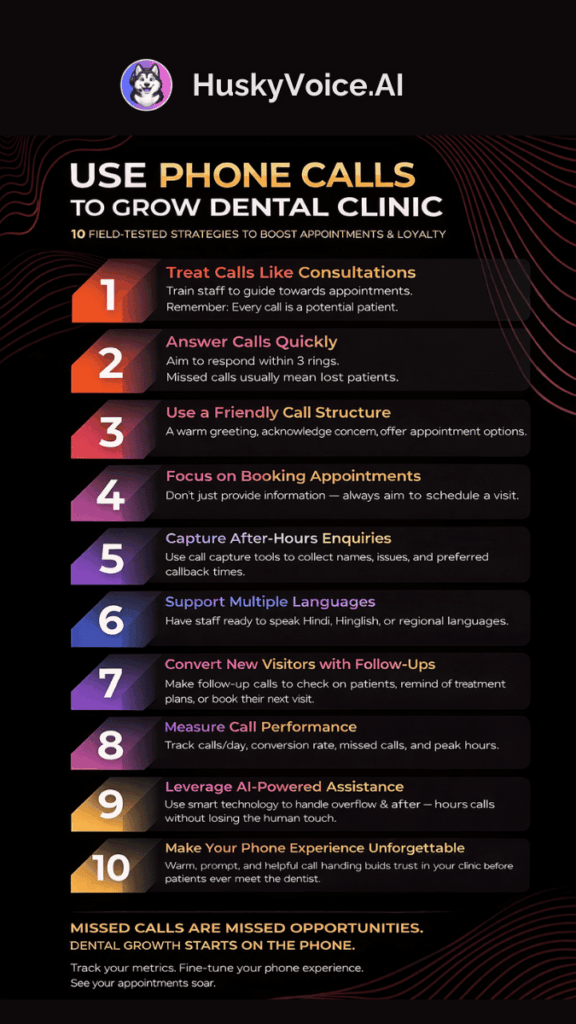
8. Track Phone Performance Like a Business Metric
Top clinics track:
- Inbound calls per day
- Missed calls
- Call-to-appointment conversion rate
- No-show rate
- Peak calling hours
Phone data reveals where revenue is being gained—or silently lost.
9. Automation Should Support Humans, Not Replace Them
Automation works best when it:
- Handles overflow and after-hours calls
- Captures patient details accurately
- Schedules or confirms appointments
- Triggers timely follow-ups
The goal is simple: no patient should ever feel ignored.
Final Takeaway
Before patients experience your clinic, your doctor, or your treatment—they experience your phone conversation.
A phone experience that is:
- Fast
- Calm
- Helpful
…creates trust, drives repeat visits, and fuels sustainable clinic growth.
Dental growth doesn’t start in the chair. It starts on the phone.