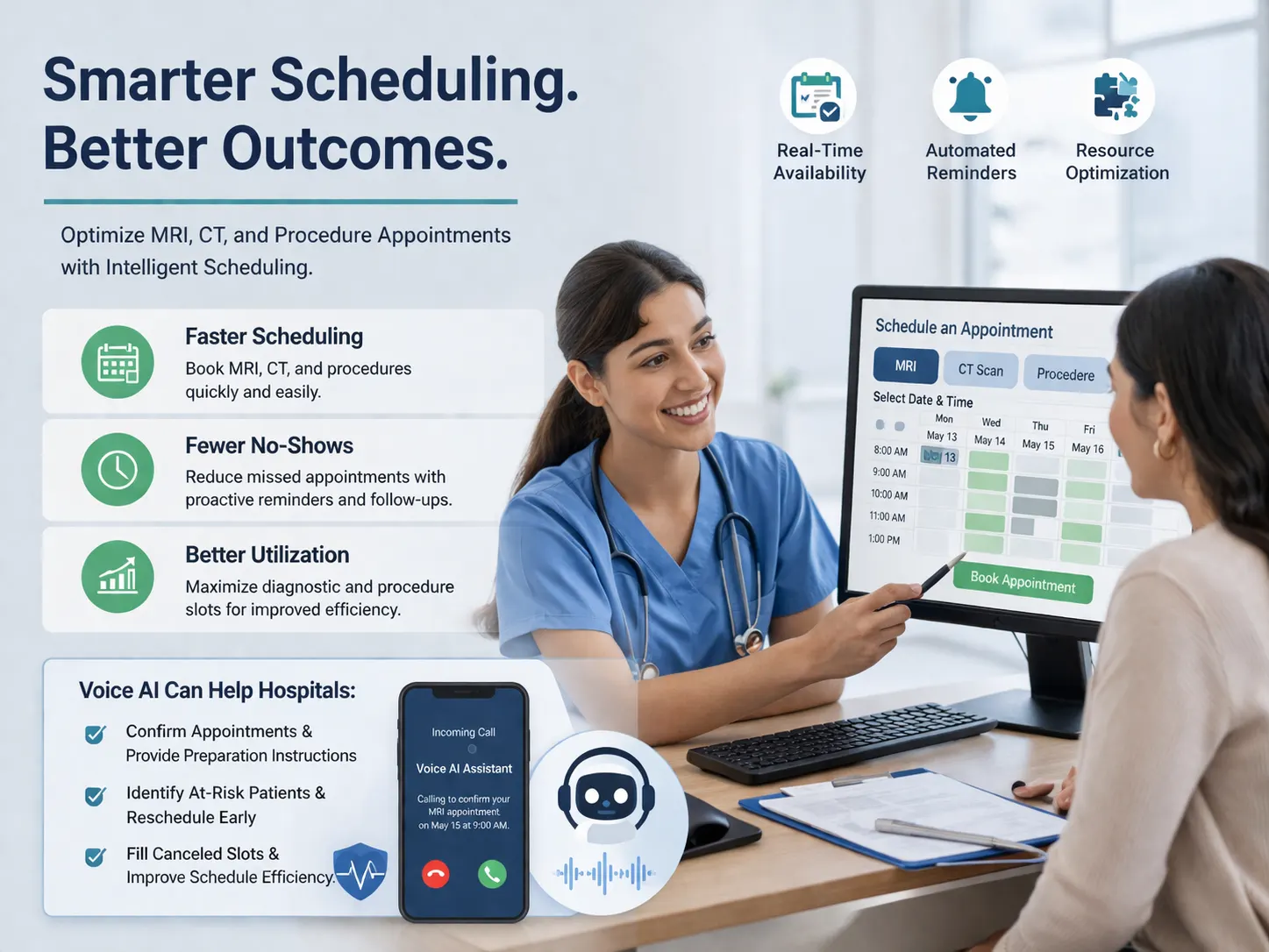
A patient no-show is frustrating because the clinic usually sees it too late.
The appointment was booked. The doctor’s time was blocked. The room was prepared. The front desk expected the patient to arrive.
Then the patient does not come.
By the time the clinic realizes the slot is empty, it is often too late to offer it to another patient.
That is why reducing patient no-shows requires more than one reminder message.
Clinics need a complete workflow: confirm, remind, reschedule, recover, and learn why patients miss appointments.
Why clinics need a no-show reduction workflow
No-shows are not always caused by careless patients.
Patients miss appointments for many reasons: they forget, cannot get transport, cannot take time off work, recover and assume the visit is unnecessary, feel anxious, cannot afford the visit, or cannot reach the clinic to reschedule.
MGMA’s 2025 poll found that 27% of medical practices said no-show rates increased versus the previous year, while 60% said rates stayed the same and 13% said they decreased.
MGMA’s 2025 no-show poll shows that missed appointments remain a live operational issue for medical practices.
The goal is not to blame patients.
The goal is to make it easier for patients to confirm, cancel, reschedule, and stay connected with care.
1. Confirm the appointment at the time of booking
No-show prevention starts when the appointment is created.
At booking, the clinic should confirm:
- Appointment date and time
- Doctor or provider name
- Clinic location
- Reason for visit
- Expected arrival time
- Documents or reports to bring
- Cancellation or rescheduling process
- Preferred reminder channel
Many no-shows happen because patients are unclear about time, location, preparation, or how to reschedule.
A clear confirmation reduces confusion later.
2. Use reminders, but do not rely on one reminder
Reminders help, but one generic reminder is usually not enough.
A Cochrane review found that SMS reminders improved healthcare appointment attendance compared with no reminders. The same review found that SMS and phone call reminders had similar effects in the included studies, though SMS reminders were generally lower cost per attendance. The Cochrane review on appointment reminder systems is useful background for clinics designing reminder workflows.
A practical reminder sequence might include:
- Confirmation immediately after booking
- Reminder 48–72 hours before the appointment
- Reminder 24 hours before the appointment
- Same-day reminder for selected appointment types
The timing should depend on the specialty, appointment type, and patient population.
3. Ask patients to confirm, cancel, or reschedule
A reminder that only says “You have an appointment tomorrow” is helpful.
But a reminder that lets the patient confirm or reschedule is more useful.
For example:
Hi, this is Green Valley Clinic. You have an appointment with Dr. Smith tomorrow at 10:30 AM. Reply 1 to confirm or 2 if you need to reschedule.
For phone calls, the script can be:
Hi, this is Maya, an AI assistant calling on behalf of Green Valley Clinic. I’m calling to confirm your appointment tomorrow at 10:30 AM. Will you be able to attend?
If the patient says no, the workflow should immediately collect rescheduling preference.
This is important because many patients do not intend to no-show. They simply need an easy way to change the appointment.
4. Make rescheduling easy
Hard rescheduling creates no-shows.
If a patient knows they cannot attend but cannot reach the clinic, they may simply not show up.
Clinics should make rescheduling easy through:
- Phone calls
- SMS links
- WhatsApp where appropriate
- Patient portal
- AI voice calls
- Front-desk callback requests
The key is to reduce friction.
If the patient cannot attend, the clinic should know early enough to offer the slot to someone else.
5. Prioritize high-risk appointments
Not every appointment needs the same reminder effort.
Some patients and appointment types carry higher no-show risk.
Common risk factors include:
- Long lead time between booking and visit
- Previous no-show history
- First-time patient
- Appointment booked far in advance
- High-demand provider slot
- Complex preparation instructions
- Procedure or diagnostic appointment
- Patient has not confirmed
Predictive model-based interventions can help target reminders more efficiently. A 2022 systematic review found that predictive modeling combined with text reminders, phone reminders, and patient navigator calls is probably effective at reducing no-shows. The review on predictive model-based no-show interventions supports the idea that clinics should target extra effort where it matters most.
For independent clinics, this does not need to start with complex AI models.
A simple rule-based list is enough to begin: prior no-shows, high-value slots, long lead time, and unconfirmed appointments.
6. Use phone calls for selected patients
Text reminders are useful, but some patients respond better to phone calls.
Phone calls can be especially helpful for:
- Older patients
- Patients with repeated no-shows
- Procedure appointments
- Diagnostics appointments
- Patients who have not confirmed by text
- High-value or hard-to-fill slots
- Patients who need instructions explained clearly
A 2024 study on outpatient radiology reminders found that personalized phone call reminders appeared more effective than SMS in reducing missed appointments, especially among older patients. The radiology reminder study highlights why clinics should consider patient demographics and reminder preferences.
The operational challenge is that manual reminder calls consume front-desk time.
This is where AI voice calls can help selected workflows.
7. Create a waitlist workflow
No-show reduction is not only about preventing empty slots.
It is also about recovering slots when patients cancel or reschedule.
A waitlist workflow helps the clinic fill open appointments quickly.
For example:
- Patient cancels or reschedules.
- The slot becomes available.
- The clinic identifies waitlisted patients.
- Patients are contacted by priority.
- The first confirmed patient gets the slot.
This is especially useful for specialists, diagnostics, dental procedures, dermatology, fertility clinics, physiotherapy, therapy, and high-demand doctors.
Without a waitlist workflow, even early cancellations can become lost capacity.
8. Follow up after no-shows quickly
Many clinics simply mark the appointment as no-show and move on.
That misses an opportunity to recover the patient.
A no-show follow-up call can ask:
- Would you like to reschedule?
- Was there a reason you could not attend?
- Do you still need the appointment?
- What day or time works better?
Example script:
Hi, this is Maya, an AI assistant calling on behalf of Green Valley Clinic. We noticed you missed your appointment today. Would you like help rescheduling, or should I let the clinic team know you no longer need this appointment?
This helps the clinic recover patients who still need care.
It also gives the clinic insight into why appointments are being missed.
9. Capture the reason for missed appointments
To reduce no-shows, clinics need to know why they happen.
Common reasons include:
- Forgot appointment
- Work conflict
- Transport issue
- Symptoms improved
- Could not reach clinic to reschedule
- Financial concern
- Fear or anxiety
- Wrong date or location
- Did not receive reminder
- Other
Once reasons are tracked, clinics can improve the workflow.
For example, if many patients say they could not reach the clinic, missed calls and rescheduling access may be the real issue.
If many patients forgot, reminder timing may need improvement.
If many patients mention transport, the clinic may need earlier confirmation.
10. Avoid relying only on no-show fees
No-show fees can be part of a clinic policy, but they are not a complete solution.
MGMA’s 2025 poll found that 42% of medical group leaders reported using a no-show fee, while 58% did not. MGMA’s no-show fee poll shows that many practices are considering fees, but fees alone do not fix access, reminder, or rescheduling problems.
Fees may discourage some missed appointments, but they can also create patient dissatisfaction if used without a clear communication process.
A better strategy combines policy with proactive reminders, easy rescheduling, and follow-up.
11. Use different workflows for different appointment types
A routine follow-up appointment does not need the same workflow as an MRI, CT scan, procedure, dental surgery, fertility appointment, or specialist consultation.
High-value or preparation-heavy appointments may need stronger confirmation.
For example:
- Routine visit: SMS reminder and confirmation.
- Procedure: phone call reminder with preparation check.
- Diagnostics: reminder plus instruction confirmation.
- New patient: confirmation call and location details.
- Repeat no-show patient: phone confirmation and reschedule option.
This keeps the clinic from over-contacting every patient while still protecting important slots.
12. Reduce inbound call bottlenecks
Sometimes no-shows happen because patients cannot reach the clinic.
A patient may try to reschedule, wait on hold, get no answer, or give up.
To reduce this, clinics should improve inbound call handling for appointment changes.
Useful workflows include:
- Dedicated appointment line
- Callback request option
- AI receptionist for appointment calls
- Missed call follow-up
- Reschedule request capture
- Clear instructions in reminder messages
If patients cannot easily cancel or reschedule, the clinic will see more no-shows.
13. Measure what changes
No-show reduction should be measured.
Track:
- No-show rate by doctor
- No-show rate by appointment type
- No-show rate by new vs returning patient
- Reminder confirmation rate
- Reschedule rate
- Cancellation lead time
- Waitlist fill rate
- No-show recovery rate
- Reason for no-show
- Front-desk time spent on reminder calls
The goal is to understand which workflow reduces missed appointments without overloading staff.
Where AI voice calls can help clinics reduce no-shows
AI voice calls can help clinics automate repetitive but important appointment workflows.
An AI voice agent can:
- Call patients to confirm appointments
- Ask whether they need to reschedule
- Collect preferred reschedule times
- Call patients after a no-show
- Capture the reason for missed appointments
- Activate waitlisted patients for open slots
- Send structured summaries to the front desk
This can reduce front-desk workload while keeping the patient experience conversational.
The AI should not give medical advice or make clinical decisions. Its role is operational: confirm, reschedule, follow up, and route the next step.
Example AI confirmation call
Hi, this is Maya, an AI assistant calling on behalf of Green Valley Clinic. I’m calling to confirm your appointment with Dr. Smith tomorrow at 10:30 AM. Will you be able to attend?
If the patient says yes:
Thank you. I’ll mark this as confirmed. Please arrive 10 minutes early and bring any relevant reports.
If the patient says no:
No problem. Would you like the clinic team to help reschedule? I can collect your preferred day and time.
Example AI no-show follow-up summary
Patient: Sarah Miller
Missed appointment: Today at 10:30 AM
Reason: Work conflict
Request: Wants to reschedule
Preference: Next Tuesday afternoon
Next step: Front desk to confirm available slot
This gives the clinic a clear next step instead of only a no-show status.
How HuskyVoiceAI helps clinics reduce no-show impact
HuskyVoiceAI helps clinics automate inbound and outbound phone call workflows using AI voice agents.
For no-show reduction, HuskyVoiceAI can support:
- Appointment reminder calls
- Appointment confirmation calls
- Reschedule request collection
- No-show follow-up calls
- Waitlist activation calls
- Missed call follow-up for appointment changes
- Call summaries, transcripts, and next steps
- Human escalation when patients need staff support
Real AI agents, not IVR menus.
HuskyVoiceAI handles real conversations, captures context, and routes the right next step.
Related resources
- How clinics lose patients from no-shows
- Doctor appointment rescheduling AI
- Reduce missed MRI and CT procedure appointments with voice AI
- AI appointment booking for independent clinics
- Healthcare voice AI
- Book a HuskyVoiceAI demo
Final thought
Clinics cannot eliminate every no-show.
But they can reduce the impact by making appointment communication easier, earlier, and more actionable.
The most effective no-show strategy is not one reminder or one penalty.
It is a workflow that helps patients confirm, reschedule, stay informed, and reconnect when they miss an appointment.
That is how clinics protect provider time, improve access, and reduce front-desk stress.