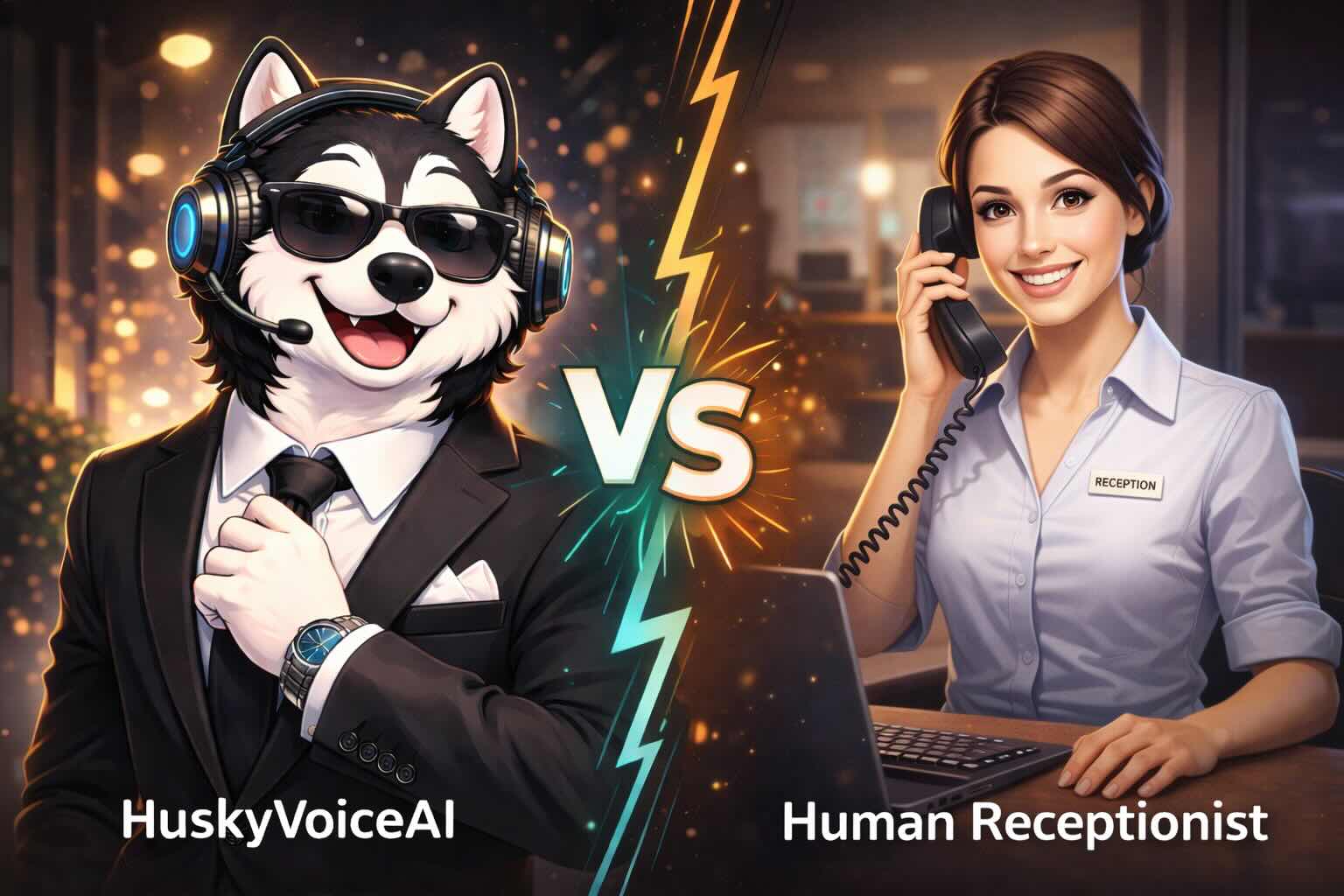
If your business still depends on humans answering phones, you are already behind.
TL;DR
India is quietly entering a new phase of customer communication — one where voice, not apps or chat, becomes the primary interface again. From clinics and airlines to real estate and government helplines, businesses are realising that AI-first voice systems are no longer optional. They are becoming core infrastructure.
1. The Quiet Crisis Nobody Is Talking About
Across India, a silent problem is growing:
- Clinics miss patient calls during peak hours
- Airlines and travel companies get overwhelmed during disruptions
- Real estate teams lose leads because no one picks up
- Hotels struggle with reservation calls during weekends
- Government helplines collapse during emergencies
The issue is not demand.
The issue is voice capacity.
Phones still ring. Customers still call.
But businesses are not equipped to answer at scale, consistently, or empathetically.
This gap is no longer small — it’s structural.
2. Why Voice Still Dominates in India
Despite apps, WhatsApp, and portals, voice remains India’s most trusted interface.
Why?
- India is linguistically diverse
- Many users prefer speaking over typing
- Urgent issues demand instant answers
- Older demographics rely heavily on calls
- Emotional or high-stress moments default to voice
When a flight is cancelled, a patient needs a doctor, or a buyer wants clarity —
people don’t open dashboards.
They pick up the phone.
India may be mobile-first, but it is still voice-first emotionally.
3. The Breaking Point: Humans Can’t Scale Voice
Traditionally, businesses solved this with:
- Receptionists
- Call centres
- Outsourced BPOs
But this model is breaking.
The reality:
- Hiring is expensive
- Training takes time
- Attrition is constant
- Quality varies by person
- Peak demand overwhelms teams
One receptionist cannot handle:
- 50 calls in 10 minutes
- 24×7 availability
- Multiple languages
- Emotional conversations back-to-back
And yet, expectations from customers keep rising.
This mismatch is pushing businesses toward a new solution.
4. Why Chatbots and IVRs Are Not the Answer
Many companies tried to fix voice problems with:
- Chatbots
- Menu-driven IVRs
- “Press 1, Press 2” systems
And customers hated it.
Because:
- Chatbots require literacy and patience
- IVRs feel robotic and frustrating
- Neither understands emotion well
- Neither adapts during chaos
In stressful moments, users don’t want to navigate systems.
They want to talk to someone who understands them.
This is where traditional automation fails — and where AI-first voice succeeds.
5. What AI-First Voice Communication Actually Means
AI-first voice is not:
- A scripted bot
- A fancy IVR
- A novelty demo
It is voice as infrastructure.
An AI-first voice system:
- Answers instantly
- Speaks naturally
- Understands intent
- Handles emotion
- Scales infinitely
- Works 24×7
- Switches languages seamlessly
Most importantly, it converses, not responds.
This is not about replacing humans.
It’s about enabling conversations humans alone cannot handle at scale.
6. Real-World Use Cases Already Working in India
This shift is not theoretical. It’s already happening.
Clinics & Hospitals
- Appointment booking
- Rescheduling
- Follow-ups
- Missed-call handling
Missed calls = missed patients. Voice AI fixes that instantly.
Airlines & Travel
- Disruption updates
- Cancellation explanations
- Passenger reassurance during chaos
One clear voice message can prevent thousands of angry calls.
Real Estate
- Lead qualification
- Site visit scheduling
- After-hours inquiry handling
Speed to voice = higher conversion.
Hospitality
- Reservation management
- Guest queries
- Seasonal call spikes
Voice AI becomes a digital front desk.
Enterprises & Support
- Overflow handling
- Tier-1 support
- Status updates
Human agents focus on complex cases, not repetitive calls.
Across sectors, the pattern is the same:
Voice AI moves from “nice to have” to operational necessity.
7. Why India Needs India-Built Voice AI
Global voice models are impressive — but they are not enough.
India has unique requirements:
- Accents change every 200 km
- Code-switching is normal (English + Hindi, Hinglish, regional mix)
- Background noise is real
- Politeness and tone matter deeply
- Cultural context changes responses
A voice system trained only on global data sounds foreign.
India needs voice AI that:
- Understands Indian accents
- Switches languages naturally
- Sounds respectful, warm, and human
- Handles real-world chaos
This is not just a technology challenge — it’s a cultural one.
8. Where HuskyVoice.AI Fits In
HuskyVoice.AI is built around one belief:
Voice AI should work in the real world, not just in demos.
It is designed to:
- Handle real phone calls
- Scale during peak demand
- Support Indian and international languages
- Sound natural and empathetic
- Work across industries — clinics, airlines, real estate, hospitality, enterprises
Not as a chatbot.
Not as an IVR replacement.
But as voice infrastructure for modern businesses.
9. 2026 and Beyond: Voice Becomes the New Front Door
A decade ago:
- Every business needed a website
Five years ago:
- Every business needed WhatsApp
Now:
- Every business needs an AI voice front desk
Because customers won’t stop calling.
And businesses can’t afford to stop answering.
Final Thought
The future of customer experience in India will not be typed.
It will be spoken.
And the companies that win in 2026 will be the ones who:
- Answer instantly
- Speak clearly
- Respond empathetically
- Scale effortlessly
If your phone still rings unanswered,
your competitors are already listening.