It is 9:36 PM.
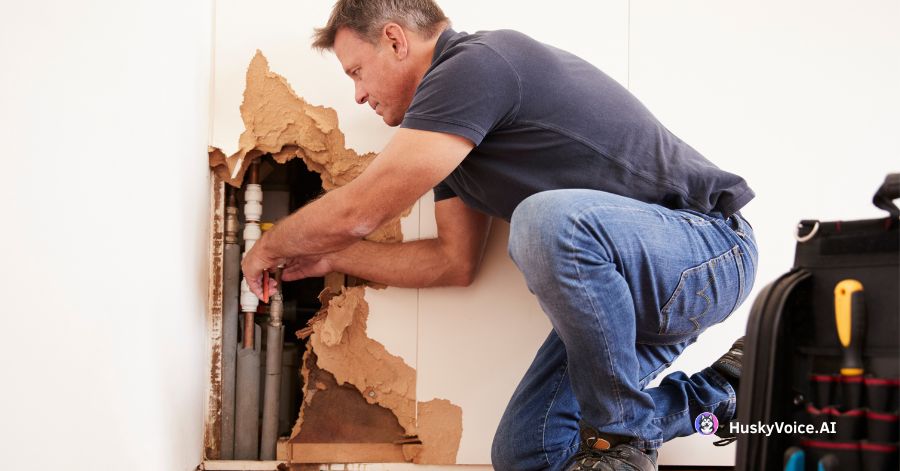
A homeowner notices water spreading under the kitchen sink. They search for an emergency plumber nearby, tap a number, and wait.
The call rings.
Nobody answers.
The phone goes to voicemail.
The homeowner does not leave a detailed message and wait until morning. They go back to Google and call the next plumber.
For the plumbing business, it may look like one after-hours missed call.
For the customer, it was the moment they were ready to book an urgent job.
That is why after-hours answering matters for plumbers.
Plumbing calls do not follow office hours
Many plumbing problems happen at inconvenient times.
A pipe leaks after dinner. A toilet stops working on a weekend. A water heater fails early in the morning. A rental property tenant reports an issue after the office has closed.
These calls are often urgent because the customer wants reassurance and a next step immediately.
For plumbers, after-hours calls can include:
- Burst pipes
- Leaking sinks
- Blocked drains
- Broken water heaters
- Overflowing toilets
- Sewer backups
- Rental property emergencies
- Commercial plumbing issues
When someone calls for one of these problems, they are usually not casually browsing.
They are trying to solve a problem now.
The cost of not answering after hours
An unanswered after-hours plumbing call can become lost revenue quickly.
The customer may not leave voicemail. They may not call back in the morning. They may not wait for your team to reopen.
They may simply call another plumber who answers.
Invoca’s home-services analysis says 27% of calls to home services businesses are not answered. It also says fewer than 3% of callers pushed to voicemail leave a message. For plumbers, that matters because voicemail is often too slow for emergency demand. Invoca’s missed sales calls analysis explains why unanswered home-services calls can become lost opportunities.
The lesson is simple: voicemail is not a strong backup plan for emergency plumbing calls.
Why plumbers miss after-hours calls
Most plumbers do not miss calls because they do not care.
They miss calls because the business is hard to staff around the clock.
Common reasons include:
- The owner is asleep or unavailable.
- The technician is already on another job.
- The business does not have a night dispatcher.
- The team relies on voicemail after closing.
- Multiple customers call during a weather or plumbing spike.
- The caller does not leave enough details for a useful callback.
This is not only a staffing issue. It is a workflow issue.
The business needs a way to answer, understand urgency, collect details, and route the next step even when the office is closed.
After-hours calls are different from daytime calls
Daytime calls may include routine enquiries, estimates, scheduling, invoice questions, and service-area checks.
After-hours calls are often more urgent.
The caller may be asking:
- Can someone come tonight?
- Is this an emergency?
- What should I do until a plumber arrives?
- Do you serve my area?
- Can I get a callback now?
Because the caller is stressed, the answering workflow needs to be clear and fast.
A long phone menu or generic voicemail greeting does not create confidence.
What an after-hours plumbing answering workflow should capture
A good after-hours answering workflow does not need to solve every issue on the spot.
But it should collect enough information to help the business act quickly.
At minimum, it should capture:
- Caller name
- Phone number
- Service address or ZIP code
- Type of plumbing issue
- Whether water is actively leaking
- Whether the issue affects the whole property
- Whether the caller needs immediate dispatch
- Whether the property is residential or commercial
- Any access or safety notes
This context helps the team decide whether the call needs immediate escalation, next-morning follow-up, or normal scheduling.
Why voicemail is weak for plumbing emergencies
Voicemail asks the customer to do the work.
The caller has to explain the issue, remember to leave a phone number, and hope someone calls back soon.
That is a poor fit for emergency calls.
A homeowner with water leaking may not want to wait. They want confirmation that someone has received the request and knows what to do next.
Voicemail also gives the plumbing business very little structure. One caller may leave a detailed message. Another may only say, “Please call me back.” Another may leave nothing at all.
That makes it harder to prioritize urgent jobs.
Traditional answering service vs AI answering for plumbers
Plumbers have a few options for after-hours coverage.
| Option | Strength | Limitation |
|---|---|---|
| Voicemail | Simple and low cost | Many callers do not leave messages |
| Live answering service | Human response after hours | Quality depends on agent training and script |
| On-call technician | Direct expert response | Can interrupt jobs, sleep, or personal time |
| AI answering service | Consistent intake, urgency questions, summaries | Needs clear escalation rules |
A live answering service can be useful when you want a human to answer every call.
An AI answering service can be useful when your call flow is repeatable: ask what happened, check urgency, collect service address, and route the request.
For many plumbing businesses, the best setup may be hybrid: AI collects structured intake, and urgent calls are escalated to a human.
How AI answering helps after hours
An AI answering service can answer calls when your office is closed and guide the caller through a short intake conversation.
For plumbers, an AI voice agent can:
- Answer after-hours calls
- Ask whether the issue is urgent
- Collect the service address
- Ask whether water is actively leaking
- Check the type of plumbing issue
- Capture callback details
- Send a summary to the team
- Escalate urgent calls if configured
- Trigger next-morning follow-up for routine calls
This turns after-hours missed calls into structured job intake.
What an AI after-hours plumbing call can sound like
A simple AI answering call could begin like this:
Hi, this is Maya, an AI assistant for the plumbing team. The office is currently closed, but I can collect a few details and route your request. Is this an urgent plumbing issue?
If the caller says yes, the AI can ask:
- What type of plumbing problem are you facing?
- Is water actively leaking right now?
- What is the service address or ZIP code?
- Is this a home, apartment, or commercial property?
- What is the best number for a callback?
Then the business receives a summary like:
Caller: Mark Jensen
Issue: Water leaking under bathroom sink
Urgency: High
Location: Within service area
Next step: Notify on-call technician for callback
That is more useful than a missed-call notification.
Why summaries matter for after-hours plumbing calls
After-hours calls need fast prioritization.
A good summary helps the team understand:
- Who called
- What happened
- Where the job is
- How urgent it is
- Whether a technician needs to respond now
- What the next step should be
ServiceTitan’s call booking data shows why call handling matters for trade businesses. In one analysis, a typical shop converted just over 4 out of 10 calls into jobs and revenue. ServiceTitan’s call booking rate analysis makes the broader point that answering and booking calls is a revenue workflow, not just an admin task.
For plumbers, after-hours summaries can help separate high-value emergencies from routine requests.
When AI should escalate to a human
AI answering should not trap urgent callers in a long conversation.
Plumbing businesses should define escalation rules clearly.
Escalation may be needed when:
- Water is actively leaking
- The issue affects the entire property
- The caller reports flooding
- The caller is a property manager with multiple units affected
- The issue involves a commercial property
- The caller is upset or needs immediate human help
- The request is outside the normal script
The AI should capture the details and route the request based on your rules.
What AI should not do for plumbing emergencies
An AI answering service should have clear boundaries.
It should not:
- Pretend to be a licensed plumber
- Give risky repair instructions
- Promise exact arrival times unless connected to dispatch availability
- Quote prices without approval
- Ignore emergency escalation rules
- Keep urgent callers in a long conversation
The job of AI is not to replace the technician.
The job is to capture the call, understand urgency, and route the next step.
After-hours answering checklist for plumbers
Use this checklist to evaluate your current workflow.
- How many calls come after 5 PM?
- How many after-hours callers leave voicemail?
- How quickly do you call them back?
- How many are emergency requests?
- How many come from Google Ads or Google Business Profile?
- Do you know which missed calls became jobs?
- Do you ask whether water is actively leaking?
- Do you capture service address or ZIP code?
- Do you have an on-call escalation rule?
- Do you receive structured summaries after calls?
If the answer to most of these questions is unclear, your after-hours workflow may be leaking revenue.
How HuskyVoiceAI helps plumbers handle after-hours calls
HuskyVoiceAI helps businesses automate inbound and outbound phone call workflows using AI voice agents.
For plumbers, HuskyVoiceAI can answer after-hours calls, ask structured intake questions, capture urgency, collect job details, send summaries, and route the next step to your team.
Common workflows include:
- After-hours call answering
- Emergency plumbing intake
- Missed call follow-up
- Service-area confirmation
- Appointment or dispatch request collection
- Call summaries and transcripts
- Human escalation when needed
Real AI agents, not IVR menus.
HuskyVoiceAI handles real conversations, captures context, and routes the right next step.
Related resources
- AI answering service for plumbers
- Why plumbers miss emergency calls
- How AI answering services handle after-hours calls
- AI call answering for businesses
- AI answering service for HVAC
- Book a HuskyVoiceAI demo
Final thought
After-hours plumbing calls are not just inconvenient calls that happen at night.
They are often urgent customer moments.
If nobody answers, the customer may not leave a message. They may not wait until morning. They may simply call the next plumber.
A better after-hours answering workflow helps plumbers capture the request, understand the urgency, and route the right next step before the opportunity disappears.